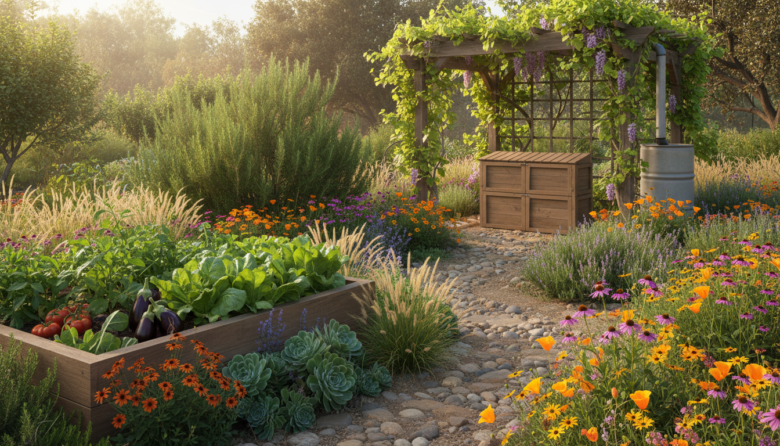
Welcome to your guide for creating beautiful outdoor spaces that work with nature. Many homeowners today want yards that reflect their values while demanding less time and resources. This approach transforms traditional high-maintenance areas into eco-friendly havens.
Recent trends show a strong shift toward functional landscapes. According to the American Society of Landscape Architects, 88% of homeowners prioritize rainwater harvesting, while 86% value native plants. These choices highlight a growing desire for yards that solve problems rather than create them.
Modern landscaping has evolved beyond perfectly manicured lawns. Today’s approach embraces methods that reduce environmental impact while increasing natural beauty. You’ll discover how to create spaces that conserve water, support local ecosystems, and give you more time to enjoy your outdoor area.
Whether you’re redesigning an existing space or starting fresh, this guide offers practical strategies. You’ll learn about water conservation, native plant selection, and creating landscapes that essentially maintain themselves. The goal is finding beauty in function while requiring significantly less water, chemicals, and your precious time.
Key Takeaways
- Modern homeowners prioritize functional landscapes that align with environmental values
- Native plants and drought-tolerant species significantly reduce water needs
- Eco-friendly approaches can create beautiful spaces with less maintenance
- Rainwater harvesting and reduced lawn areas are trending practices
- Working with natural processes creates more resilient outdoor environments
- Thoughtful planning leads to yards that require less time and resources
- Functional beauty often surpasses traditional high-maintenance designs
Introduction to Eco-Friendly Garden Design
A quiet revolution is taking root in backyards across the country. Homeowners are moving away from yards that demand constant work. They are choosing spaces that work in harmony with the local environment.
The Evolution of Sustainable Gardening
For decades, the ideal yard was a perfectly green lawn. This approach often fought against natural processes. It relied heavily on chemicals, water, and weekly upkeep.
Today’s mindset is fundamentally different. We now see our outdoor areas as part of a larger ecosystem. The goal is to create a living landscape that supports birds, bees, and healthy soil.
This shift brings significant advantages:
- Less work: Native plants thrive with minimal help.
- Water savings: Thoughtful practices drastically cut usage.
- Wildlife support: Your yard becomes a habitat.
This evolved method of gardening creates beautiful, resilient gardens. It’s a smarter way to cultivate your piece of the earth.
How to Implement Sustainable Garden Design Style Principles
The journey to a resilient outdoor space is guided by four key concepts that work in harmony. These core ideas form a smart framework for your landscape plan. They help you save resources and enjoy your yard more.
Let’s look at the main principles that create a beautiful, easy-care yard.
- Treat water as a precious resource.
- Choose native plants for natural toughness.
- Value your soil’s health.
- Minimize waste wherever possible.
Prioritizing Water as a Valuable Resource
Smart water use is the first rule. Instead of sprinklers, think about drip systems. Collect rain in barrels or create shallow basins called rain gardens.
This approach cuts your water bill. It also helps your plants develop deeper roots.
Embracing Native Plants for Resilience
Local plants are already suited to your weather and soil. They need less extra water and fight off pests better. This makes your landscaping much stronger.
You’ll also welcome more birds and butterflies to your space.
Minimizing Waste and Reducing Lawn Dependency
Think about how much lawn you truly use. Large grassy areas create clippings and need constant care.
Swapping unused turf for flower beds or shrubs cuts down on waste. It gives you back your weekends, too. Following these principles leads to a yard that is both lovely and logical.
Water Conservation Strategies in Your Garden
Conserving water in your landscape begins with understanding how to work with natural rainfall patterns. Simple changes can dramatically reduce your outdoor water use while keeping plants healthy.
These approaches help you create a beautiful space that respects our precious water resources. You’ll save money and contribute to environmental conservation efforts.
Rainwater Harvesting Techniques
Capture rainfall instead of relying solely on municipal supplies. Rain barrels connected to downspouts provide chlorine-free water for your plants.
More advanced systems include underground cisterns that store thousands of gallons. Rain gardens are special landscape features that capture runoff from hard surfaces.
- Barrels collect water from roof downspouts
- Cisterns offer large-scale storage capacity
- Rain gardens filter pollutants naturally
Efficient Irrigation Practices
Drip systems deliver water directly to plant roots where it’s needed most. This method reduces evaporation and prevents overwatering.
Adding mulch to beds helps retain soil moisture. Consider reducing irrigation in lawn areas during dry periods.
Turf will naturally bounce back when rains return. Smart irrigation practices ensure every drop counts.
Enhancing Soil Health and Native Plant Selection
Your yard’s success starts with understanding and working with your existing soil conditions. Many people mistakenly believe they need to “fix” their soil, but the real secret lies in choosing the right plants for your natural environment.

This approach saves time, money, and creates a more resilient landscape. You’ll work with nature instead of fighting against it.
Building and Maintaining Healthy Soil
Healthy soil is the foundation of any thriving outdoor space. Deep-rooted native species and perennial grasses naturally improve soil structure over time.
Their extensive root systems prevent erosion and create channels for water infiltration. This natural process builds rich, living soil without expensive amendments.
Avoid synthetic fertilizers that can disrupt soil ecosystems. Recent studies show they may even make flowers less attractive to pollinators.
Selecting Plants Adapted to Your Environment
Every soil type supports its own palette of beautiful plants. Dry, sandy areas are perfect for drought-tolerant species like Butterfly Milkweed.
Heavy clay soil that stays moist supports different native plants. These species have evolved to thrive in your specific climate and conditions.
The “right plant, right place” philosophy creates landscapes that require minimal care. You’ll enjoy beautiful results while preventing soil erosion naturally.
Designing for Biodiversity and Local Wildlife
Your outdoor space can become a vital sanctuary for local creatures. This approach brings movement and sound to your property while supporting essential ecosystems.
A thriving habitat starts with understanding food chains. Most birds need insect protein to raise their young. Caterpillars serve as the primary food source for 97% of bird species.
Creating Habitats for Birds, Bees, and Butterflies
Simple additions make your yard welcoming to wildlife. Native flowering plants provide nectar for bees and butterflies. Water features and brush piles offer drinking spots and shelter.
Many caterpillars only eat specific native plants they evolved with. Choosing local species ensures these insects have the food they need. This creates a complete life cycle right in your space.
Supporting Ecosystem Balance Through Plant Communities
Group plants that naturally grow together in your region. These communities offer varied food sources throughout the seasons. They also provide layered shelter for different animals.
Your property plays a crucial role in connecting fragmented natural areas. Even small yards can serve as stepping stones for wildlife movement. Every habitat patch contributes to regional biodiversity.
Integrating Eco-Friendly Materials in Landscape Design
Material selection represents a critical decision point that shapes both the look and ecological footprint of your property. The building blocks you choose for paths, patios, and structures carry significant weight.
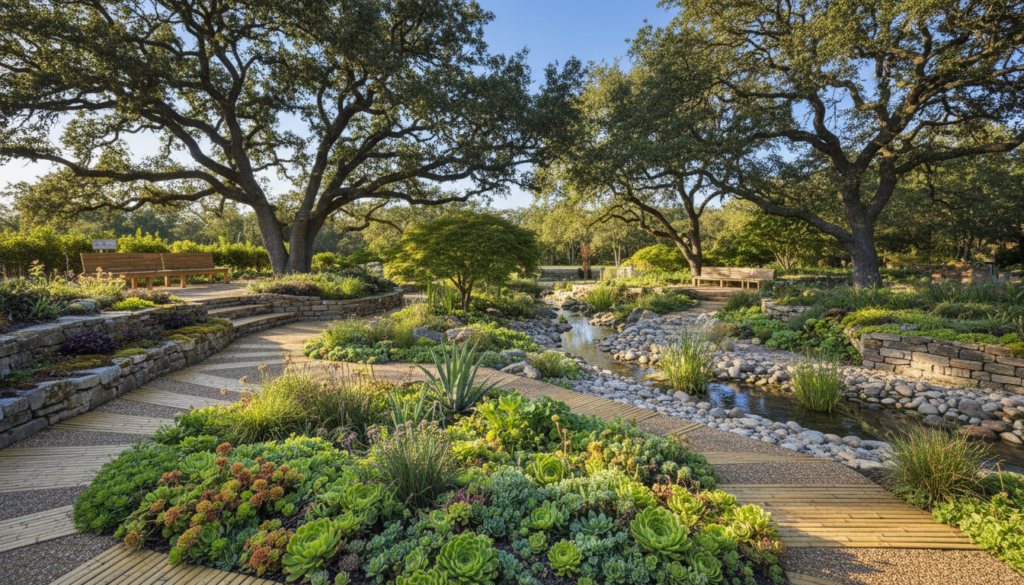
Every component has an environmental story from extraction to disposal. Smart choices reduce this impact while creating beautiful, functional spaces.
Choosing Recycled and Locally Sourced Materials
Local materials dramatically cut transportation emissions. They’re naturally suited to your climate’s conditions. This approach supports regional economies too.
Reclaimed wood brings character and history to your landscape. Old barn wood or salvaged timber often outperforms new products. These materials avoid landfill waste while adding unique charm.
Recycled options include crushed concrete for pathways and composite decking from plastics. They reduce demand for virgin resources. Permeable paving allows rainwater to soak into the ground naturally.
Balance your plan to favor planted areas over paved surfaces. This increases ecological value while reducing material costs. Even construction waste can become habitat features for wildlife.
Thoughtful material choices prove that environmental responsibility enhances aesthetics. Your landscape becomes a testament to smart, beautiful living.
Embracing a Natural and Low-Maintenance Garden Mindset
True freedom in landscaping comes when we stop fighting against natural processes and start embracing them as partners. This mental shift transforms how you approach your outdoor space and dramatically reduces the time spent on upkeep.
Letting Your Garden Evolve Naturally
Instead of treating your yard like a static display, welcome its natural changes. Plants will self-seed and move around, creating delightful surprises. This dynamic approach to gardening means less maintenance and more enjoyment.
Dense planting covers the ground completely, leaving no room for weeds. This layered approach creates beautiful landscapes that maintain themselves. Your garden design becomes a living, evolving space.
Learning to Love a “Messy” Yard
What some call messy is actually vital habitat for wildlife. Leaving plant stems standing through winter provides shelter for beneficial insects. This natural look adds texture and interest to your yard.
Skip aggressive fall cleanups that harm local ecology. Allow leaves to remain where they fall, returning nutrients to the soil. This way of thinking about your outdoor space creates healthier landscapes with minimal effort.
The right mindset transforms your relationship with nature. You’ll spend less time working and more time enjoying your beautiful, self-sustaining garden.
Conclusion
Your journey toward a more rewarding outdoor living experience begins with a simple shift in perspective. By working with natural processes rather than against them, you create spaces that require less effort while offering greater ecological value.
The approaches we’ve explored—from water conservation to native plant selection—provide practical ways to transform your property. Each choice you make contributes to a healthier local ecosystem while reducing maintenance time.
Remember that progress matters more than perfection. Even small changes in how you approach your outdoor area make a meaningful difference. Your landscape becomes part of a larger solution, supporting wildlife and natural balance.
This method of creating beautiful, functional gardens proves that environmental responsibility and aesthetic appeal go hand in hand. Your outdoor space can be both personally enjoyable and ecologically significant.