Welcome to your go-to guide for mastering the art of keeping your greenery happy. Many well-intentioned gardeners struggle with finding the perfect balance for their green companions. This guide will help you understand the delicate dance of providing moisture.
Giving your green companions too much water is a common mistake. It can suffocate the roots, leading to rot. On the other hand, not providing enough moisture causes them to dry out and struggle. There is no single schedule that works for every type of plant.
Your specific environment plays a huge role. The type of soil, the amount of sunlight, and the season all matter. We will explore these factors to give you practical, real-world advice.
This article covers everything from understanding individual needs to choosing the best tools for your space. You will gain the confidence to make smart decisions for your garden’s health.
Key Takeaways
- Overwatering is a leading cause of problems for greenery.
- Roots need oxygen as much as they need moisture.
- The right schedule depends on your specific environment.
- Observing your greenery is more effective than a rigid calendar.
- Proper techniques are a skill that improves with practice.
Understanding Your Plant’s Water Requirements
Successful plant care begins with understanding the individual moisture requirements of each species. Different types have unique needs based on their natural habitats.
Assessing Individual Plant Needs
Tropical varieties typically require more frequent hydration than desert-adapted succulents. A large Snake Plant might only need water once a month during summer. In winter, it may go two months between drinks.
When checking if your green companions need water, don’t just look at the surface. Most roots grow deep in the soil. Use the finger test for smaller containers. For large floor specimens, a moisture meter works best.
Recognizing Signs of Under- and Overwatering
Overhydration symptoms include soft, mushy tissue and brown spots on leaves. Soggy soil can attract fungus gnats. Portions of foliage may turn dark.
Underwatering shows as pale or wrinkled leaves. Soil pulls away from the pot sides. Most specimens recover better from slight dryness than from root rot caused by excess moisture.
Watering Plants Correctly in Home Gardens
Your garden’s layout dramatically influences how you should provide moisture. A single approach does not fit all settings.
Understanding your specific setup is the first step. Different arrangements have vastly different thirst levels.
Benefits of Tailored Watering Techniques
A customized strategy saves time and conserves a vital resource. It also leads to healthier, more productive growth.
Consider these common garden types and their needs:
- In-ground beds with mulch become quite self-sufficient. They often only need extra water during heatwaves or long dry spells.
- Standard raised beds need more attention than in-ground ones. Their elevated position exposes the soil more.
- Containers dry out the fastest. They may need daily hydration, even twice in extreme heat.
Elevated raised beds act like containers. They benefit greatly from automatic irrigation systems.
A great general tip for a vegetable plot is about one inch of water per week. This can come from rain or your hose.
Matching your method to your space is a powerful watering technique. It ensures every green companion gets just what it needs.
Factors That Impact Watering Frequency
Forget a one-size-fits-all schedule; your container’s size, material, and even the soil inside are the real bosses of your hydration routine. Many variables interact to determine how often your specimens may need a drink.
Soil Type, Pot Size, and Moisture Levels
The container itself is a major player. A small pot dries out much faster than a large one. The material also matters. Porous clay or terra cotta pots allow air to reach roots, speeding up drying.
Non-porous plastic or glazed ceramic containers hold moisture much longer.
Your soil mix is equally critical. Heavy soil retains water well. Lightweight mixes, like those with lava rock, drain quickly and need more frequent attention.
Your home environment plays a huge role. Consider these key factors:
- Light & Temperature: Bright, warm spots increase watering frequency.
- Humidity: Higher humidity slows down soil drying.
- Top-Dressing: A layer of moss or bark protects the surface, conserving moisture.
- Root Density: A tight root ball can dry out fast, but a severely packed one might not absorb water effectively.
The secret is to observe how all these factors work together. Adjust your approach as seasons change and your greenery grows.
Step-by-Step Guide to a Successful Watering Routine
Creating a consistent hydration routine is simpler than you might think. Start by observing your greenery’s specific needs and local weather patterns.
Preparing Your Watering Schedule
Build your schedule around the early morning hours. This time of day allows moisture to penetrate deeply before evaporation occurs.
Consider these factors when planning:
- Check soil moisture at root level before each session
- Adjust frequency based on seasonal temperature changes
- Note how quickly containers dry compared to ground beds
Practical Application Techniques
Apply water slowly around the entire base. This ensures all roots receive equal hydration. Thorough saturation encourages deep root growth.
For extremely dry specimens, use a two-step approach. Moisturize the surface, wait 30 minutes, then water again. This helps moisture reach deeper levels.
Set reminders to avoid overhydration. A simple tip: use phone alarms for irrigation systems. This way you provide consistent care without waste.
Choosing the Right Irrigation System for Home Gardens
Selecting the perfect irrigation system can transform your gardening experience. The right setup saves time and conserves precious resources.
Modern options range from simple to sophisticated. Each offers unique benefits for different spaces.
Drip Irrigation vs. Soaker Hoses
Drip irrigation systems provide the ultimate hands-off convenience. When paired with a timer, they operate automatically.
Products like the Garden Row Snip-n-Drip Soaker System water up to four 25-foot rows. Setup takes about an hour each season.
Soaker hoses offer excellent water efficiency. They use up to 80% less water than traditional sprinklers.
Their weeping action delivers moisture directly to roots. This minimizes evaporation and runoff.
Consider these ancient yet effective solutions:
- Olla irrigation uses unglazed clay pots buried in soil
- This method reduces water waste by approximately 70%
- Moisture releases through pores as needed
For lawn areas, avoid high-spray sprinklers. Choose models that keep water closer to the ground.
Spot sprinklers work well for small patches. They’re more efficient than oscillating systems for entire yards.
Essential Watering Equipment and Tools
Investing in quality equipment transforms routine maintenance into efficient care. The right implements save time and protect your greenery’s health. Smart choices lead to better results with less effort.
Using Quality Watering Cans and Hoses
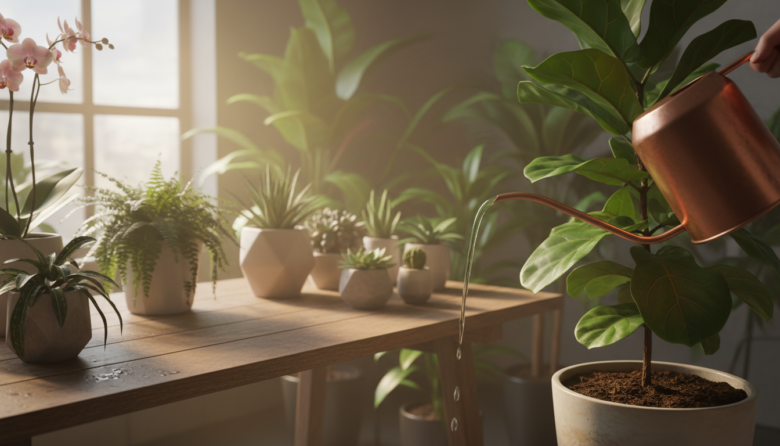
A watering wand with a breaker head provides gentle showers. This delivers good volume without damaging delicate foliage. Choose models with local shut-off valves for easy control.
Long handles measuring 24-36 inches reduce bending strain. They make reaching various containers more comfortable. This is especially helpful for those with mobility concerns.
Avoid spray nozzles that can harm leaves and wash away soil. Mist settings often deliver insufficient moisture. Instead, focus on tools that provide consistent, gentle flow.
Regular maintenance prevents water waste. Repair or replace leaky hoses and broken equipment promptly. This conservation tip saves resources and money.
Consider these specialized tools for different needs:
- Watering cans with wide openings simplify filling and mixing
- Squeeze bottles target dry soil in tiny pots precisely
- Spray bottles work well for air specimens and bromeliads
- Extra-long devices reach hanging greenery without ladders
Matching your tools to your space ensures every specimen gets proper hydration. The right equipment makes the entire process smoother and more effective.
Preventing Common Watering Mistakes
Even experienced growers sometimes struggle with finding the perfect moisture balance. Many common errors stem from good intentions but poor execution. Understanding these pitfalls helps you avoid them completely.
Avoiding Overwatering Pitfalls
Giving too much water remains the top reason greenery fails. This problem suffocates roots by blocking oxygen. The issue worsens when summer routines continue into winter.
Avoid “hit and run” hydration. Quick splashes every few days prevent deep root growth. Instead, provide thorough, less frequent drinks.
It’s safer to underwater slightly than overdo it. Most specimens bounce back from dryness. Severe root rot often proves fatal.
Hydrophobic soil repels moisture instead of absorbing it. You’ll see water bead on the surface. Dig down to find bone-dry earth underneath.
This condition comes from inconsistent care. Amend affected areas with rich compost to restore absorption. Protect soil surfaces with mulch.
Keep leaves dry when possible. Wet foliage encourages mildew and fungal diseases. This is especially crucial for squash varieties.
Damp leaves during cool months create perfect conditions for problems. Always direct water to the roots where it’s needed most.
Seasonal Adjustments for Optimal Watering
As seasons shift, your approach to hydration must evolve to match nature’s rhythm. Different weather conditions throughout the year demand flexible strategies for maintaining proper moisture levels.
Watering in Dry Versus Rainy Conditions
During dry weather, your greenery may need more frequent attention. Containers can dry out quickly and may need daily hydration by mid-summer.
Hanging baskets in sunny locations often require twice-daily attention during peak heat. Install a rain gauge to track how much moisture nature provides.
When adequate rain falls weekly, established garden beds with mulch need little supplemental water. This saves time and conserves resources.
Adapting Techniques for Temperature Changes
Cooler months bring reduced watering frequency needs. Many specimens enter a semi-dormant state during darker periods.
A 6-inch Pink Aglaonema might need hydration every 7-9 days in summer but only every 14 days in winter. This adjustment prevents overhydration issues.
Newly seeded areas require special care. Keep the soil surface moist for tiny germinating roots with frequent light applications.
During heat waves, water in-ground gardens once per day. Cool-season lawns can go dormant for up to six weeks with minimal long-term damage.
Conclusion
The true secret to thriving greenery lies not in a calendar, but in connection. Success comes from observing your specific environment and each plant’s unique signals.
Remember, many factors like pot size, soil type, and the season dictate when to provide water. Your garden is a living system that changes daily.
With practice over the years, this process becomes intuitive. You’ll naturally sense when your green companions need attention. This mindful approach leads to healthier growth and deeper enjoyment.
You now have a solid foundation. Trust your observations, apply these principles, and watch your space flourish.