Welcome! This guide is your first step toward a beautiful, balanced outdoor area. We’ll explore how to blend the wild charm of nature with the tidy structure needed for everyday life. This creates a peaceful retreat right outside your door.
According to landscape expert Mark Curtis, this method breaks from rigid traditions. Instead of sharp borders, it promotes a flowing integration of spaces. The result feels less controlled and more harmonious with the local environment.
This thinking goes beyond simple beauty. It considers the broader ecological picture. Your property can become part of a larger system, supporting wildlife and using fewer resources.
Adopting this method doesn’t mean letting your yard grow wild. It’s about thoughtful curation. You combine traditional elements in a fresh, inspired way. The journey ahead will cover planning, plant selection, and practical steps for your transformation.
Key Takeaways
- This approach blends free-flowing beauty with practical structure for residential properties.
- It moves away from rigid borders toward a more integrated, holistic landscape.
- The philosophy considers ecological benefits like wildlife habitat and resource conservation.
- Achieving this look involves thoughtful curation, not a complete lack of order.
- This guide provides a step-by-step process to make the transformation achievable.
- The result is a low-maintenance, beautiful retreat that connects to the broader natural world.
Understanding the Naturalistic Garden Style for Suburban Homes
Many homeowners dream of a yard that feels both beautiful and effortless. This dream is at the core of the naturalistic approach. It blends ecological health with visual appeal.
Defining the Aesthetic and Ecological Goals
The main goal is to create a living landscape. It should support local wildlife and require less work. This method uses plants that thrive in your local conditions.
You work with nature, not against it. The result is a resilient and dynamic outdoor area.
Comparing Traditional vs. Naturalistic Designs
Traditional layouts often feature manicured lawns and sharp edges. They prioritize control and symmetry. This style demands frequent mowing and pruning.
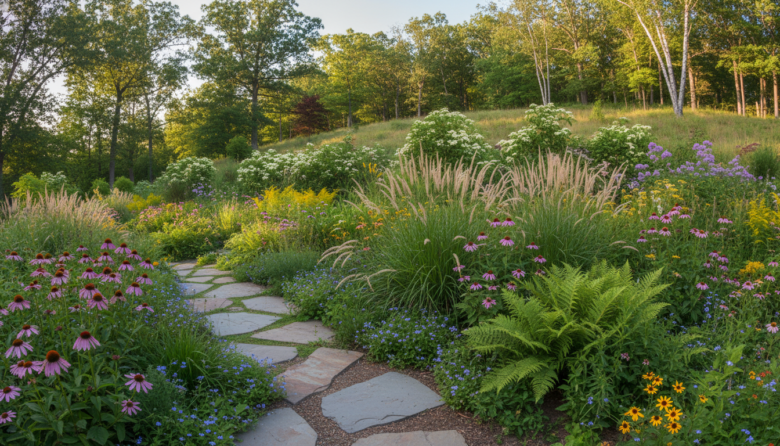
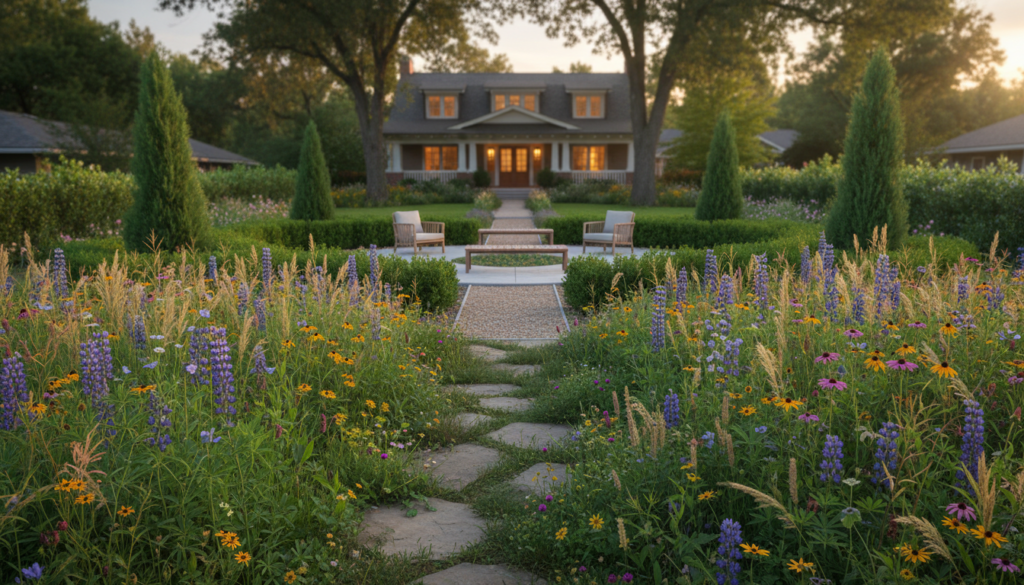
In contrast, a naturalistic design feels more relaxed. Plants are grouped in flowing drifts. Ornamental grasses and perennials create soft textures.
Here are the key differences in the planting approach:
- Traditional: Single specimens, uniform rows, and neat borders.
- Naturalistic: Groupings in blocks, varying heights, and layered textures.
Both garden types can include patios and paths. But they arrange these elements differently. Understanding these contrasts helps you choose what works for your place and conditions.
Planning and Designing Your Ideal Garden
The foundation of any great garden design lies in thoughtful assessment of your site. Begin by observing how sunlight moves across your property throughout the day. Note where water collects after rain and any existing slopes or elevation changes.
Assessing Your Suburban Space and Site Conditions
Understanding your specific conditions helps you work with nature rather than against it. Look at soil quality and drainage patterns in different areas. This knowledge informs which plants will thrive and where to place functional elements.
Consider how you move through the space from your house to various garden zones. Jeff Epping’s approach demonstrates smart solutions for challenging sites. His sloped property required creative thinking about elevation changes.
Integrating Hardscape and Softscape Elements
Hardscape elements should complement rather than dominate your landscape. Patios, paths, and walls create structure while blending with planting areas. Choose materials that feel natural and allow water to permeate the soil.
Epping designed an elevated patio with minimal steps down to the garden. This approach puts you in the landscape instead of above it. The same rustic blocks used for patio walls tied different zones together visually.
Keep balance in mind when planning your outdoor area. Pathways should guide movement in a natural flow. Seating spaces feel best when nestled within the planting scheme rather than separated from it.
Selecting the Right Plants and Materials
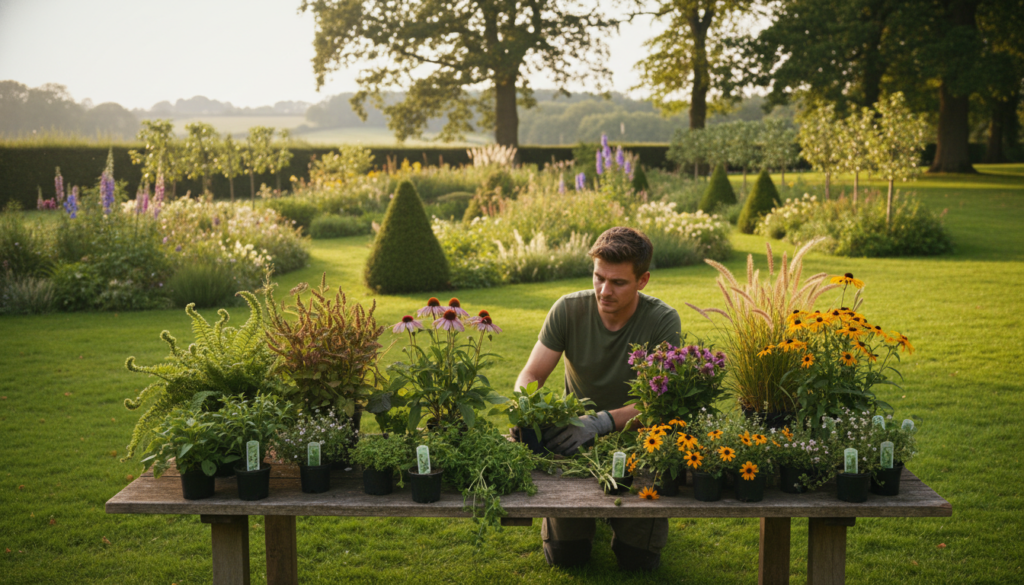
Your plant choices form the living heart of your landscape, setting the tone for its beauty and resilience. A smart planting design goes beyond simply picking pretty flowers. It creates a community of plants that support each other and local wildlife.
Expert Mark Curtis suggests a balanced approach. He advises against using only native species. Instead, blend them with climate-adapted non-natives for a more robust and floriferous landscape.
Choosing Native and Climate-Adapted Species
Start with a foundation of local native plants. These species are already suited to your soil and climate. They need less water and provide essential habitat.
But don’t stop there. Include tough, adaptable perennials and ornamental grasses from similar regions. This mix ensures your garden thrives with less effort.
Mixing Exotics with Local Natives for Year-Round Appeal
Jeff Epping successfully uses about 30% non-native plants. He selects them to fill bloom gaps when local species are dormant. This strategy provides continuous flower interest.
Think about all seasons when you plant. Here’s a simple guide for year-round beauty:
- Spring: Add early bloomers like spring ephemerals for bees.
- Summer: Choose long-blooming perennials like hummingbird mint.
- Fall: Include late stars like Joe Pye weed for butterflies.
- Winter: Value plants with interesting seedheads and structure.
This thoughtful approach creates a landscape that feels alive through every season. It connects your space to the larger rhythms of nature.
Practical Steps to Transform Your Suburban Yard
Transforming your outdoor space begins with actionable steps that blend creativity with practicality. This phase turns your vision into a living, breathing landscape.
Step-by-Step Garden Design Strategy
Start with a clear planting plan that considers seasonal interest. Group plants in drifts rather than single specimens for a natural look.
Ornamental grasses provide year-round structure. Combine them with flowering perennials for continuous color.
Incorporating Water Features and Wildlife-Friendly Elements
Even small water features attract beneficial wildlife. A simple birdbath or shallow basin creates a drinking spot.
Choose native plants that support local pollinators. These selections need less maintenance while helping the ecosystem.
Utilizing Salvaged and Re-Purposed Garden Accents
Allison Ronney demonstrates how salvaged items add character. She finds vintage pieces at auctions and yard sales.
An old bicycle becomes a planter for bright coreopsis. A rustic toolbox transforms into a succulent display.
Jeff Epping used boulders from his property to build walls. This approach integrates existing materials beautifully.
Plants that self-sow, like meadow rue, fill gaps naturally. They reduce weed growth while adding spontaneous beauty.
Conclusion
Modern gardening philosophies are evolving toward climate-resilient approaches that benefit both people and wildlife. This naturalistic method creates beautiful spaces that work with local ecosystems.
Transforming your property is a gradual process. It requires patience as plants mature and conditions change over time.
The environmental rewards are significant. You’ll reduce water use and create vital habitat for pollinators. Your outdoor area becomes part of a larger ecological network.
Start by assessing your specific site and removing invasive species. Choose native plants adapted to your regional climate. Many communities now support this approach through updated regulations.
Any lot can become a thriving sanctuary. This garden design connects you to nature while requiring less maintenance. It’s a meaningful way to contribute to your local environment.